
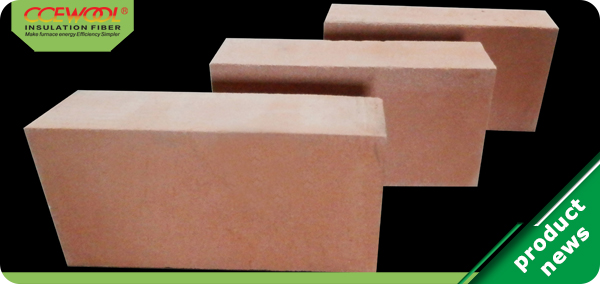
Lightweight clay bricks are made of sillimanite composite as the matrix, mixed with special additives and a small amount of rare earth oxides, and then high-pressure molding and high-temperature firing. Ordinary lightweight heat-insulating refractory bricks are clay, high-aluminum and high-strength floating bead bricks, low-iron mullite, high-aluminum poly-light heat-insulating refractory bricks, and diatomite heat-insulating refractory bricks.
Characteristics of lightweight clay bricks
1. Light weight: The absolute dry density of lightweight bricks is only 500-700Kg/m*3, which is 1/4 of ordinary concrete, 1/3 of clay, and 1/2 of hollow block. Because its density is smaller than water, it is commonly known as aerated concrete floating on water, the use of this product in buildings can reduce the weight of the building and greatly reduce the overall cost of the building.
2. Heat preservation and heat insulation: Because the aerated concrete has tiny pores and these pores form an air layer in the material, which greatly improves the effect of heat preservation and heat insulation, so that the thermal conductivity of the aerated concrete is 0.11- 0.16W/MK. The thermal insulation effect is 5 times that of clay bricks and 10 times that of ordinary concrete.
3. Sound absorption and sound insulation: The porous structure of aerated concrete makes it equipped with good sound absorption and sound insulation performance, which can create a high airtight indoor space for you. Provide you with a peaceful and comfortable living environment.
Next issue we will continue to introduce characteristics of lightweight clay bricks. Please stay tuned.

