
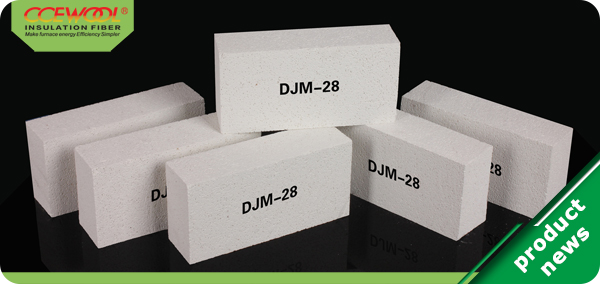
Insulating refractory material refers to a material with high porosity, low density, thermal insulation performance, and shielding effect on heat. Due to the light weight of insulating refractories, they are often referred to as lightweight refractories. Insulating refractories, in addition to being mainly used to prevent the outflow loss of heat at higher than ambient temperature, are also used to prevent the inflow of heat at lower than ambient temperature. When used in the former case, it is often called an insulation material; in the latter case, it is called a cold insulation material.
One of the most commonly used classification methods is to classify and name materials according to their chemical mineral composition or raw materials used in production. For example, lightweight thermal insulation refractory products made of clay raw materials, siliceous or high-alumina raw materials are called lightweight clays Brick, light silica brick or light high alumina brick.
If classified according to the working temperature, heat insulation refractory materials can be classified into 3 types:
(1) Low temperature insulation material <600℃
(2) Medium temperature insulation material 600~1200℃
(3) High temperature insulation material>1200℃
From the perspective of density, the density of lightweight heat-insulating refractory materials is generally not greater than 1.3g/cm3, the density of commonly used light-weight heat-insulating refractory materials is 0.6~1.0g/cm3, if the bulk density is 0.3~0.4g /cm3 or lower, it is called ultra-light insulation material.

