
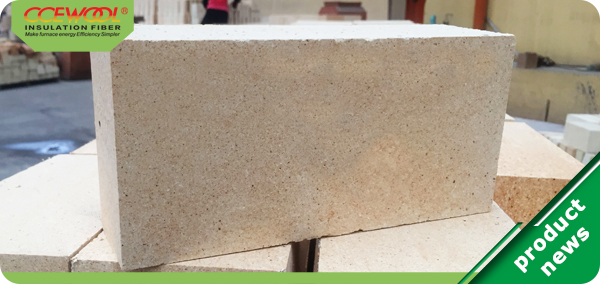
This issue continues to introduce the characteristics of clay bricks for coke ovens:
(4) Slag resistance of clay bricks. The main chemical components of clay refractory products are SiO2 and Al2O3, and the content of SiO2 is greater than Al2O3, so clay bricks are weakly acidic, so its ability to resist acid slag erosion is better than that of alkaline slag erosion.
(5) Clay bricks’ linear change on reheating . The manufacture of clay-based refractory products uses soft clay as a binder. Due to the incomplete mineralization of the binder and clinker during the firing process, when clay bricks are used for long time under high temperature it will shrink or expand irreversibly. This is called linear change on reheating. And the shrinkage rate of clay brick products is required not to exceed 1%.
Due to the above characteristics of clay bricks, for modern large-volume coke ovens, clay bricks are not suitable for high-temperature parts, and are mainly used for parts with low temperature and large fluctuations, such as furnace doors, rising pipe lining bricks, and small flues lining bricks, furnace roofs, regenerator sealing walls and lattice bricks, etc. Due to the wide range of raw materials, easy manufacture and low cost of clay bricks, some small coke ovens can be built with clay bricks, but during operation, the temperature should be strictly controlled to prevent early damage to the top of the furnace.

