
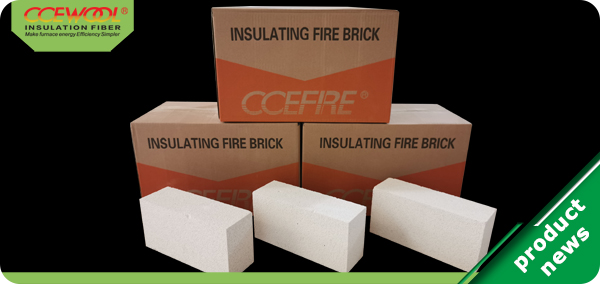
Light clay bricks are lightweight refractory products with aluminum content of 30%-46%. They are produced with clay clinker or light clinker as the main raw material. They are usually produced by the combustible method. Chemical methods or foam methods can also be used to form a porous structure. The raw materials are mixed with water to make a mouldable mud or slurry, and the mouldable mud is made into bricks by extrusion or pouring, dried and fired in an oxidizing atmosphere at 1250-1350°C. The bulk density of commonly used light clay bricks is between 0.75-1.2g/cm3. The mostly used are bricks with density 1g/cm3.
Light clay bricks have been favored by most industrial furnace manufacturers due to their good performance and low price. As long as the insulation required for places that are not in direct contact with the flame, they are basically replaced by lightweight clay bricks. So what are the advantages and disadvantages of light clay bricks? The heat storage loss of industrial furnace masonry and the heat dissipation loss of the furnace surface generally account for about 24 to 45% of the fuel consumption. Using lightweight bricks with low thermal conductivity and small heat capacity as structural material for the furnace body can save fuel consumption; At the same time, because the furnace can be quickly heated and cooled, it can improve the production efficiency of the equipment; it can also reduce the weight of the furnace body, simplify the structure of the furnace, improve product quality, reduce working environment temperature, and improve labor condition.
However, light refractory bricks have high porosity and loose structure, and cannot be used for parts that directly contact slag and liquid metal. They have low mechanical strength and cannot be used for load-bearing structures. They have poor wear resistance and are not suitable for parts that directly contact with charge materials and subject to constant friction.
Next issue we will continue to introduce application of light refractory bricks in industrial furnaces. Please stay tuned!

