
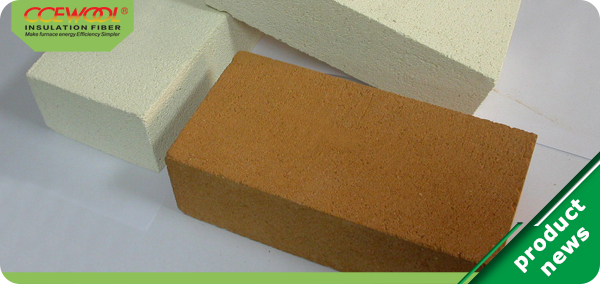
Light weight clay bricks contains some impurities that may have great impact on high temperature resistance of lightweight clay bricks. The impact of impurities on high temperature resistance of lightweight clay bricks is related to the impurities’ type and quantity. Different impurities will have different impact on high temperature resistance of lightweight clay bricks. The more types of impurities, the larger the quantity of one certain impurities, the greater the impact on the high temperature resistance of lightweight clay bricks.
The impurities’ impact on high temperature resistance of lightweight clay bricks is actually the impact on the high temperature properties of MaO and CaO. The impurities may have reaction with CaO or MgO and generate some low melting point materials. And these low melting point materials will become liquid under high temperature. Thus the high temperature resistance of lightweight clay bricks is negatively affected. Impurities in clay bricks are mainly Fe2O3, SiO2 and Al2O3. These 3 impurities doesn’t have big impact on MgO’s high temperature properties, because they react with MgO and doesn’t generate materials of low melting point. For example, MgO react with SiO2 and generate MgSiO, its melting point 1890℃。MgO react with Al2O3 and generate MgAl2O4, melting point 2135℃. MgO can dissolve a lot of Fe2O3 and doesn’t generate liquid and has strong ability to absorb Fe2O3. In fire clay brick, Fe2O3 content is normally below 1.5%. So these impurities have little impact on high temperature properties of MgO.
Next issue we will continue to introduce impurities’ impact on high temperature properties of fire clay brick. Please stay tuned!

