
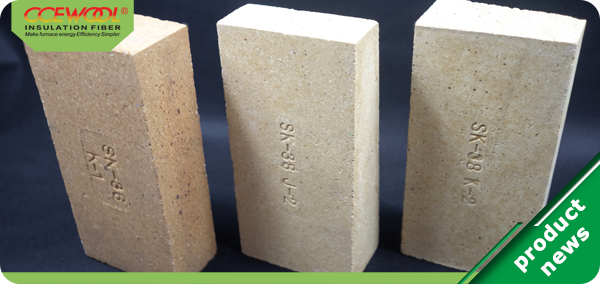
a. Refractoriness
The refractoriness of high-alumina refractory bricks is higher than that of clay refractory bricks and semi-silica bricks, reaching 1750~1790 ℃, which belongs to high-grade refractory materials.
b, softening temperature under load
Because the Al2O3 in the high alumina refractory brick is high, the amount of impurities is small, and the fusible glass is less, so the softening temperature under load is higher than that of clay brick, but because the mullite crystal does not form a network structure, the softening temperature under load is still not as high as that of silica brick.
c. Slag resistance
High alumina refractory bricks contain more Al2O3, which is close to neutral refractory materials, and can resist the corrosion of acidic slag and alkaline slag. Because of the presence of SiO2, the ability to resist alkaline slag is weaker than that of acid-resistant slag.
High alumina refractory bricks are mainly used for the lining of blast furnaces, hot blast stoves, electric furnace roofs, blast furnaces, reverberatory furnaces and rotary kilns. In addition, high-alumina refractory bricks are also widely used as open hearth regenerative checker bricks, plugs for pouring systems, and nozzle bricks. However, the price of high-alumina refractory bricks is higher than that of clay bricks, so high-alumina refractory bricks do not need to be used in places where clay bricks can meet the requirements.

