
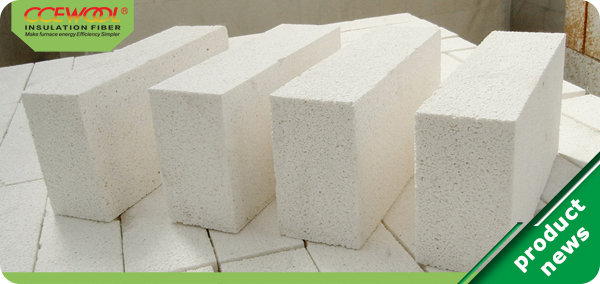
The heat transfer in light-weight thermal insulation bricks is through two parts: the transfer through the solid phase and the transfer through the gas phase. At low temperatures, heat transfer is mainly in the solid phase; at high temperatures, heat transfer is mainly through gas phase. In order to reduce the heat transfer through solid phase, it is necessary to select a solid phase with low thermal conductivity, and it is also necessary to reduce the contact area between solid particles. Therefore, the ways to improve the thermal insulation performance of thermal insulation bricks are:
① Increase the porosity;
② Reduce the size of pore
③ Increase the complexity of organizational structure at all levels;
④ Reduce solid phase contact;
⑤ Add light-shielding materials to hinder heat transfer through radiation.
There are three ways to produce lightweight insulation bricks:
First, add lightweight aggregates, wrap the lightweight aggregates with a matrix, and then use cement bonding, chemical bonding or ceramic bonding to make porous materials;
Second, add combustibles, and burn out the combustibles at high temperature, leaving pores in place to form porous materials;
Third, make foam slurry, solidify it with cement, and make porous material after sintering.

